
Mucho Rico Mezcal

ABOUT:
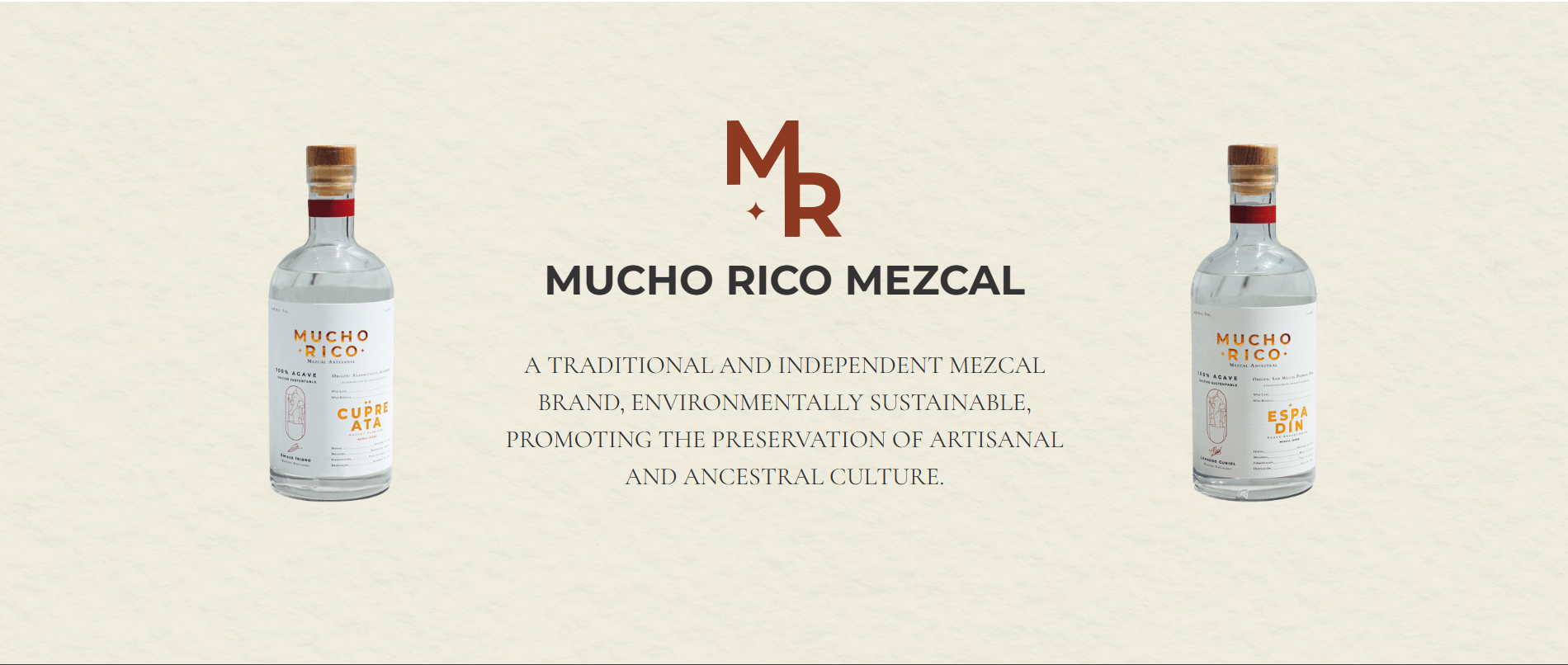
Mucho Rico Mezcal is a traditional, independent, and environmentally sustainable brand deeply committed to rescuing and preserving Mexico's artisanal and ancestral agave culture. Produced in the revered mezcal communities of Axaxacualco (Guerrero) and San Miguel Piedras (Oaxaca), the brand’s identity is built on community mutual aid and empirical, trans-generational knowledge. Maestros Emilio Isidro and Leandro Curiel both learned the craft from their fathers and are now passing it down to their own children and grandchildren. To guarantee maximum quality, Mucho Rico harvests exclusively during the dry season—when the wild and semi-cultivated maguey concentrates the most sugar—and relies on 100% natural, open-air fermentation without controlled temperatures. Operating strictly by the philosophy of Maestro Emilio Isidro, who states, "If the mezcal doesn't make pearls, then it's really not mezcal," the brand ensures all expressions are proofed between 43% and 55% ABV, resulting in deeply authentic, uncompromising spirits.
WEBSITE:
MEZCALS OFFERED:
Joven Cupreata (Artesanal): Crafted by Maestro Emilio Isidro in Axaxacualco, Guerrero, utilizing the endemic Agave Cupreata (often called Maguey Papalote) that matures for 7 to 13 years on the hillsides. This artisanal expression is fermented naturally and distilled in traditional copper stills. Billed as refreshing, friendly, and perfect for slow sipping (or beber a besitos — "drinking in little kisses"), it features an inviting aroma of medium smoke with light, cooling hints of menthol in the background. On the palate, it is bright and deeply flavorful, led by predominant notes of fresh citrus and stone fruit.
Espadín (Ancestral): Crafted by Maestro Leandro Curiel in San Miguel Piedras, Oaxaca, using Agave Angustifolia that matures for 6 to 8 years. This expression honors the deeply historic "Ancestral" category of mezcal production. Following a slow roast in a conical earthen oven, the agave is milled entirely by hand using a heavy wooden mallet in a wooden canoe—a rustic, labor-intensive technique dating back to the colonial period. It is then naturally fermented and distilled in traditional clay pots, yielding a profoundly rich, earthy, and authentic representation of Oaxacan terroir.